By Staff Reporter
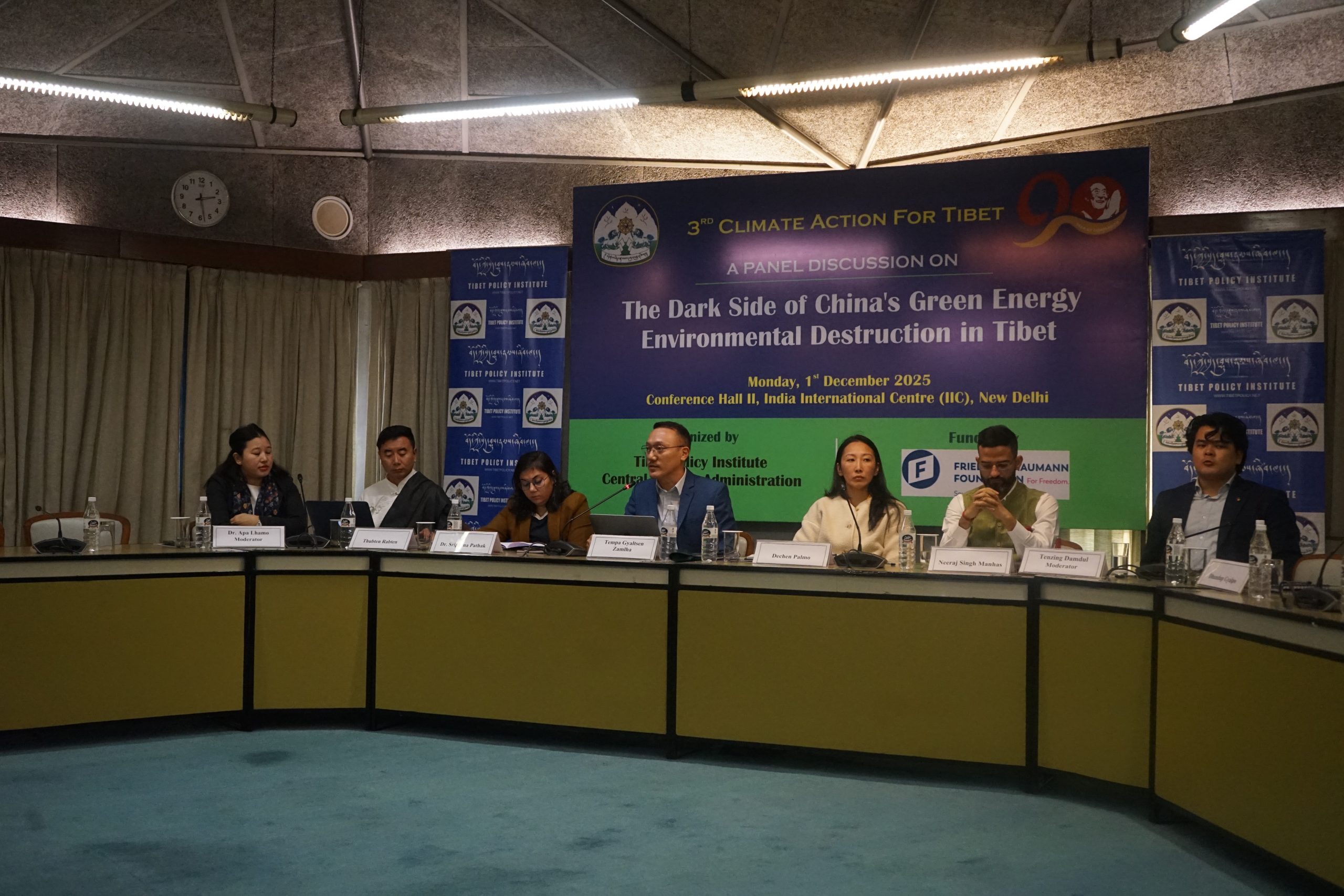
A panel discussion was held on 1 December 2025 at the India International Centre (IIC), New Delhi, brought to light the severe ecological and social costs of China’s so-called “green energy revolution” in Tibet. Organized by the Tibet Policy Institute (TPI) as part of the 3rd Climate Action for Tibet series, the event urged scholars, policymakers, and media professionals to rethink the global environmental narrative surrounding China’s rapid renewable energy expansion.
The discussion, titled The Dark Side of China’s Green Energy: Environmental Destruction in Tibet, ran from 2:00 PM to 5:00 PM and was attended by researchers from think tanks, universities, media institutions, and independent experts. It marked the first such public event in India dedicated to exposing the hidden environmental and human rights implications of China’s green energy expansion through destructive mining and dam projects on the Tibetan Plateau.
Global Green Energy, Local Destruction
Speakers noted that China’s dominance in the renewable energy supply chain—especially in rare earth minerals, copper and lithium processing—has led to massive industrial expansion in Tibet. While promoted internationally as sustainable climate action, many projects have instead resulted in water contamination, ecosystem collapse, cultural displacement, and intensified political repression.
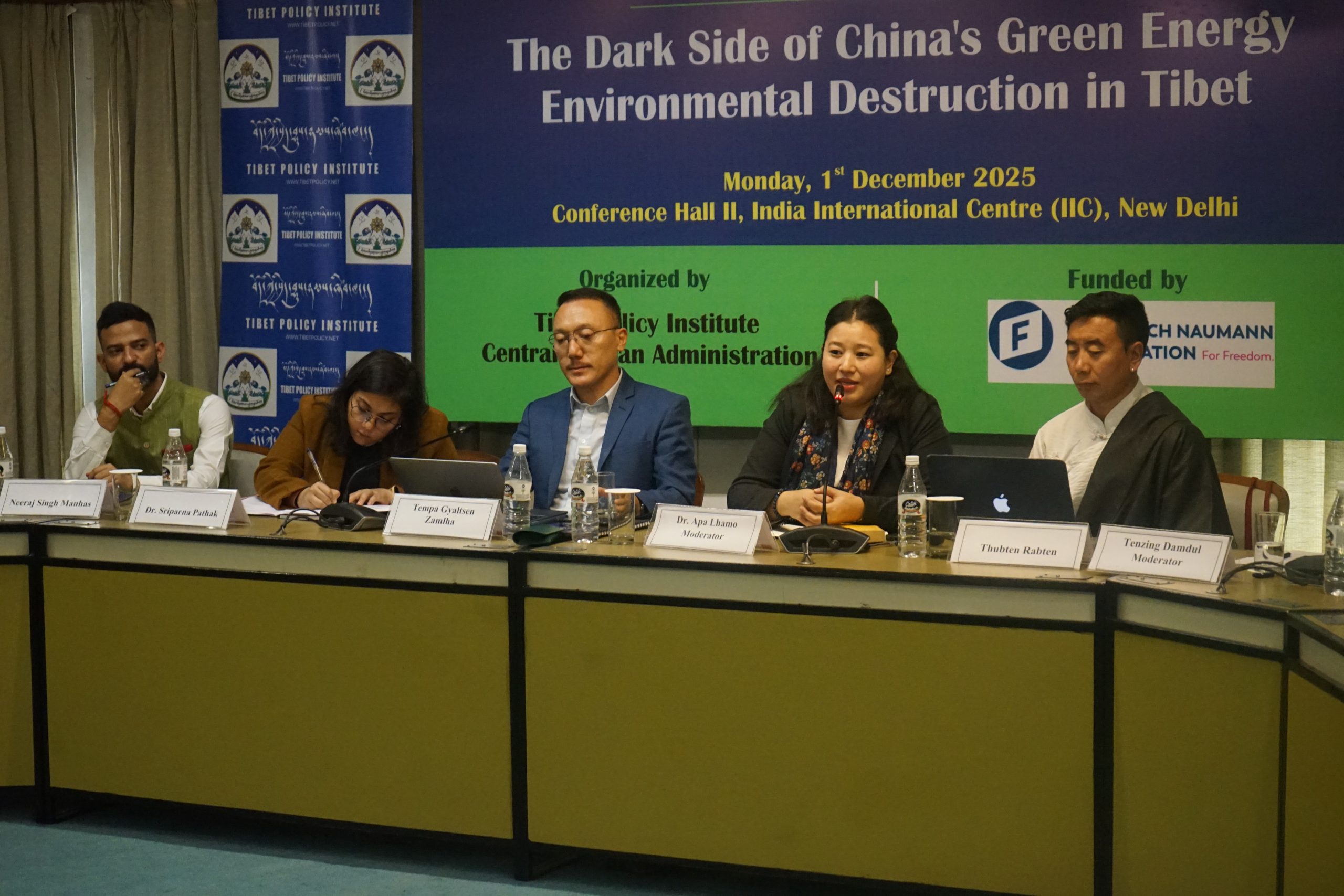
“Under the guise of green energy development, Tibet is being reshaped to fuel China’s economic and geopolitical ambitions,” said Tempa Gyaltsen Zamlha, Deputy Director of the Tibet Policy Institute, in his welcome address. “These mines and mega-dams are marketed as climate-friendly, but they have devastated Tibet’s rivers, grasslands, wildlife habitats, and traditional communities.”
 The Tibetan Plateau, often called the Third Pole, contains the world’s largest reserve of freshwater outside the polar regions. Its rivers support nearly 1.9 billion people across Asia. Yet, scientists have warned that the plateau is warming at nearly twice the global average, accelerating glacial melt and causing irreversible environmental instability.
Session One: Mining and Socio-Environmental Impacts
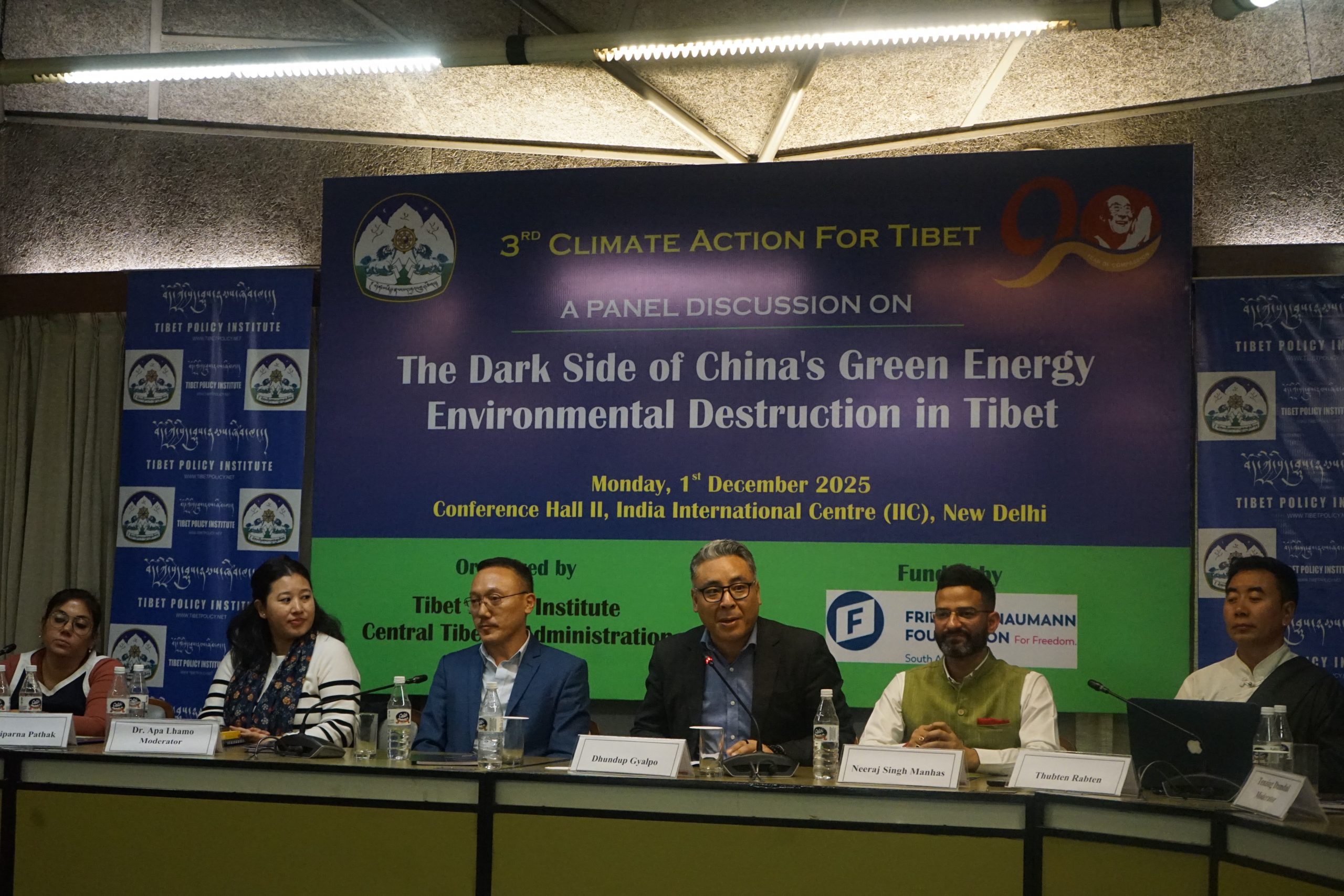
Session One was moderated by Dr. Apa Lhamo, Research Fellow at the Centre for China Analysis & Strategy.
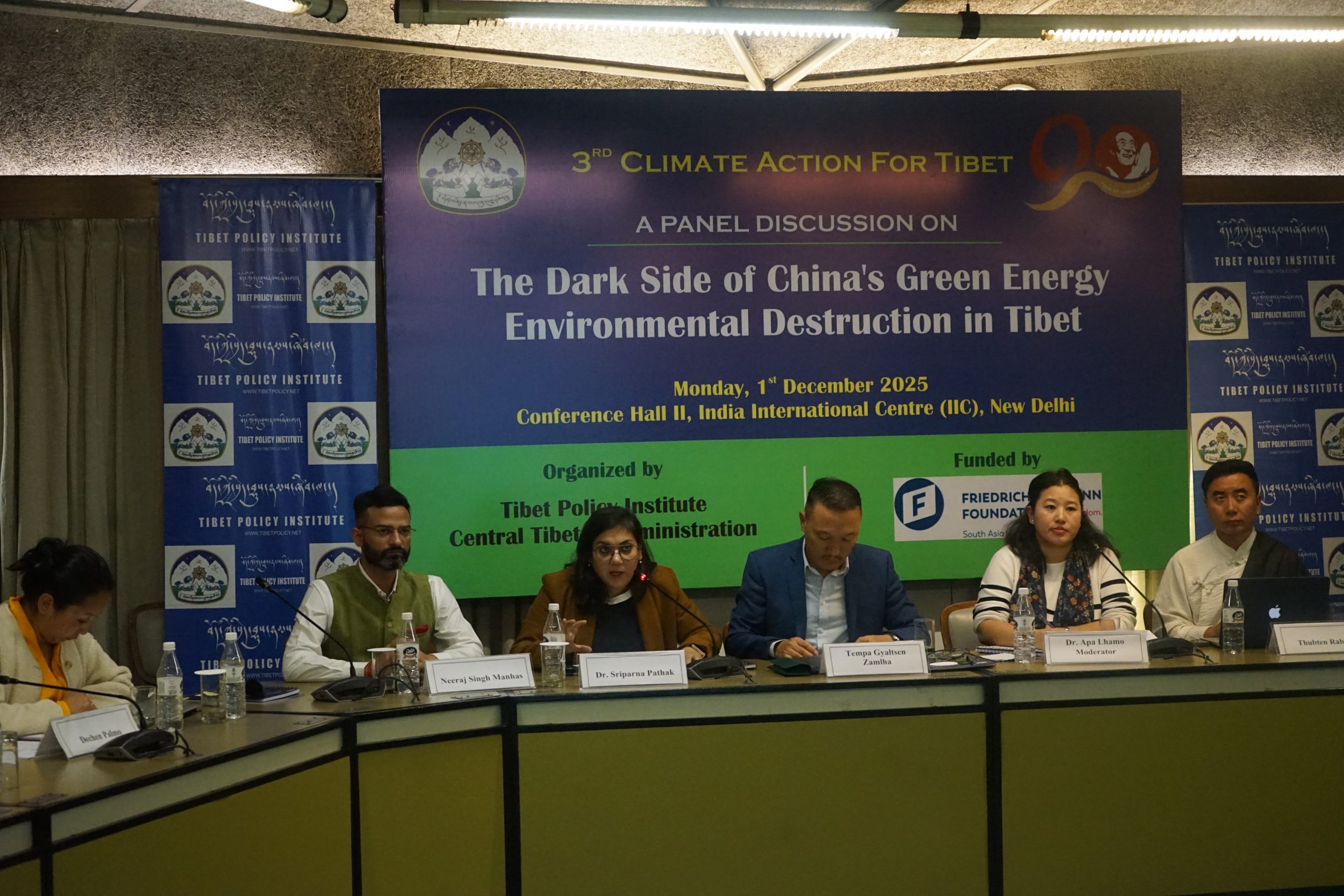
Tempa Gyaltsen Zamlha presented a detailed report on mining activities in Tibet, arguing that China’s lithium and rare earth extraction amounts to “greenwashing on a global scale.” He highlighted pollution of rivers, destruction of sacred mountians, confiscation of pasturelands, and state violence against protesting Tibetans.
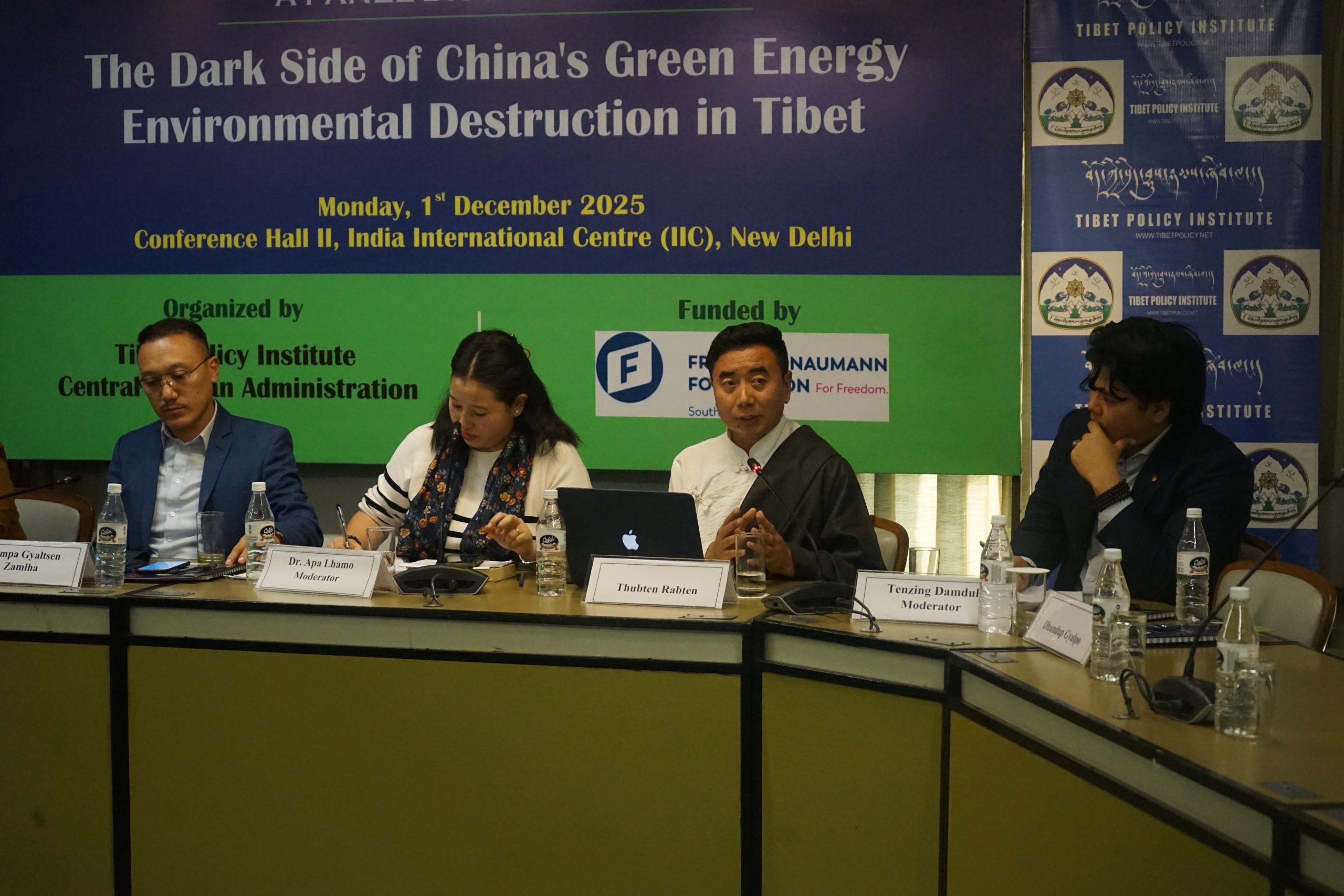 Thubten Rabten, representing a mining-affected community in Tibet, shared a real-time case study of an ongoing protest and subsequent government repression. His testimony, speakers noted, was a rare public account from within Tibet’s tightly monitored resource extraction zones.
Dr. Sriparna Pathak, China expert at O.P. Jindal Global University, examined the geopolitical consequences of what she called China’s “rapacity for mining.” She focused on the security implications for India, particularly given Tibet’s role as a water source for major transboundary rivers flowing into the subcontinent.
 Session Two: Damming Tibet’s Rivers
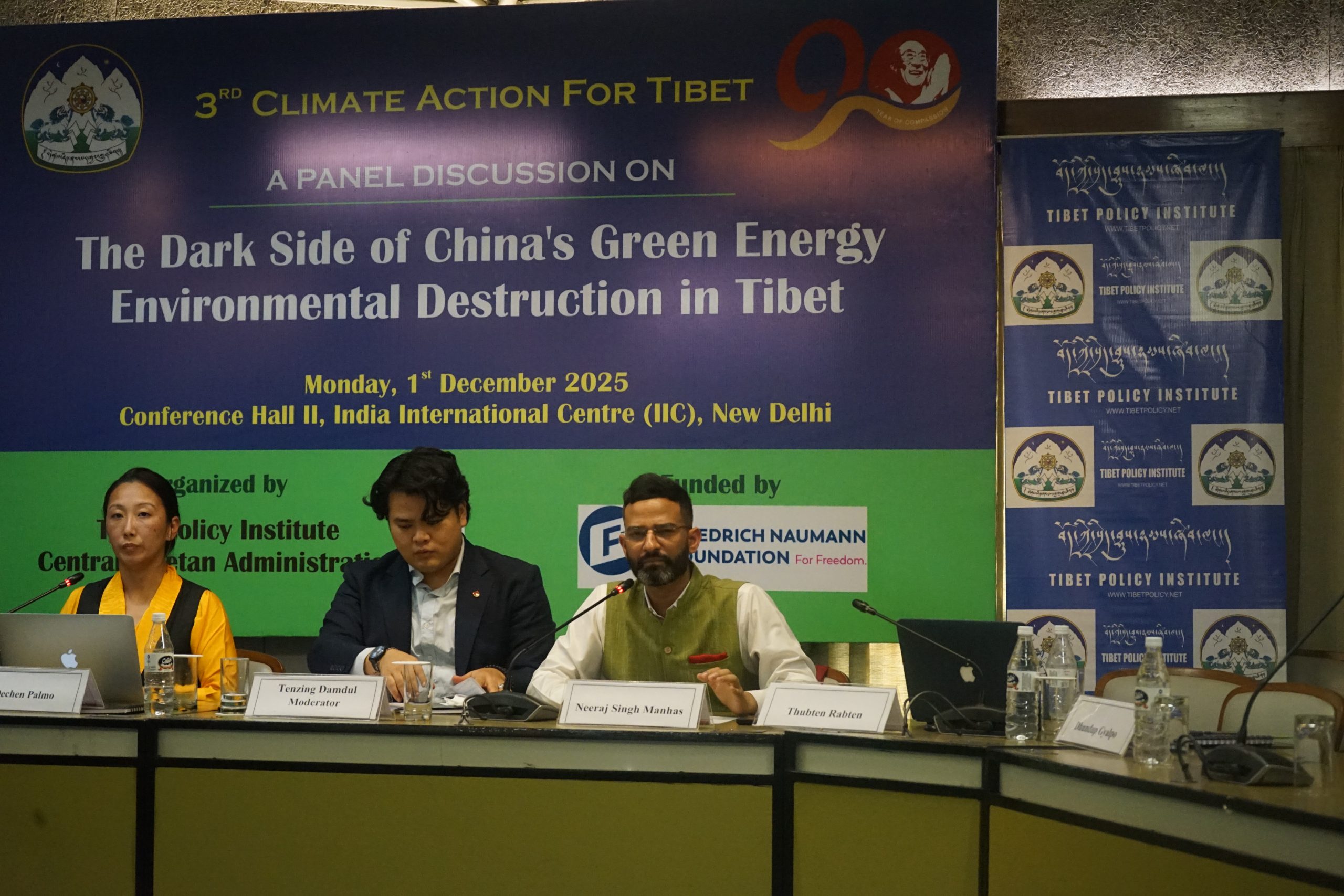
Session Two, moderated by Tenzing Damdul, Senior Researcher at the Foundation for Non-Violent Alternatives, focused on China’s massive hydropower expansion.
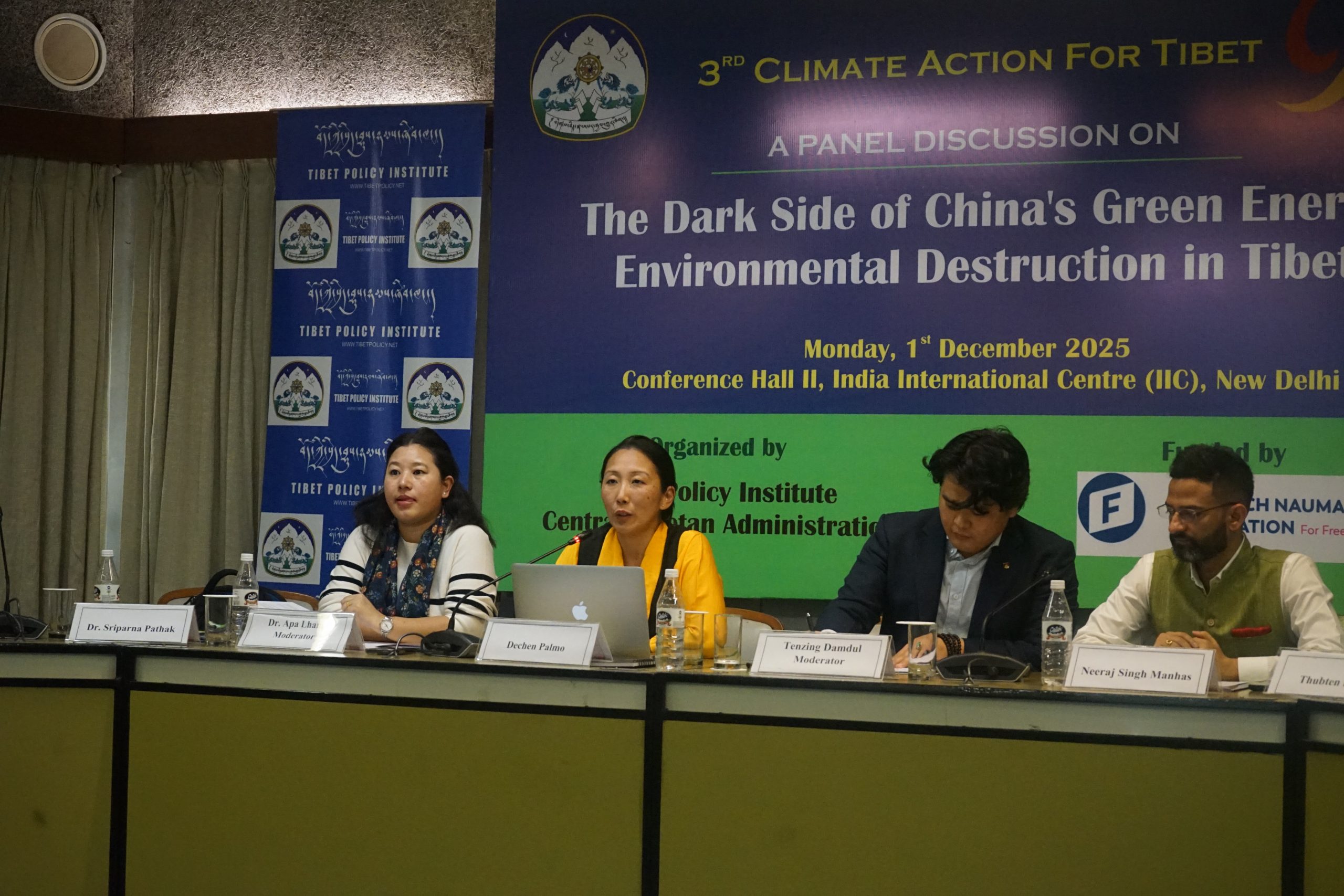
Dechen Palmo, Research Fellow at TPI, provided evidence showing how mega dams in Tibet disrupt fragile ecosystems, threaten downstream water security, and increase landslide and earthquake risks. “Hydropower is branded as renewable energy,” she said, “but in Tibet, it has become a tool of displacement and control.”
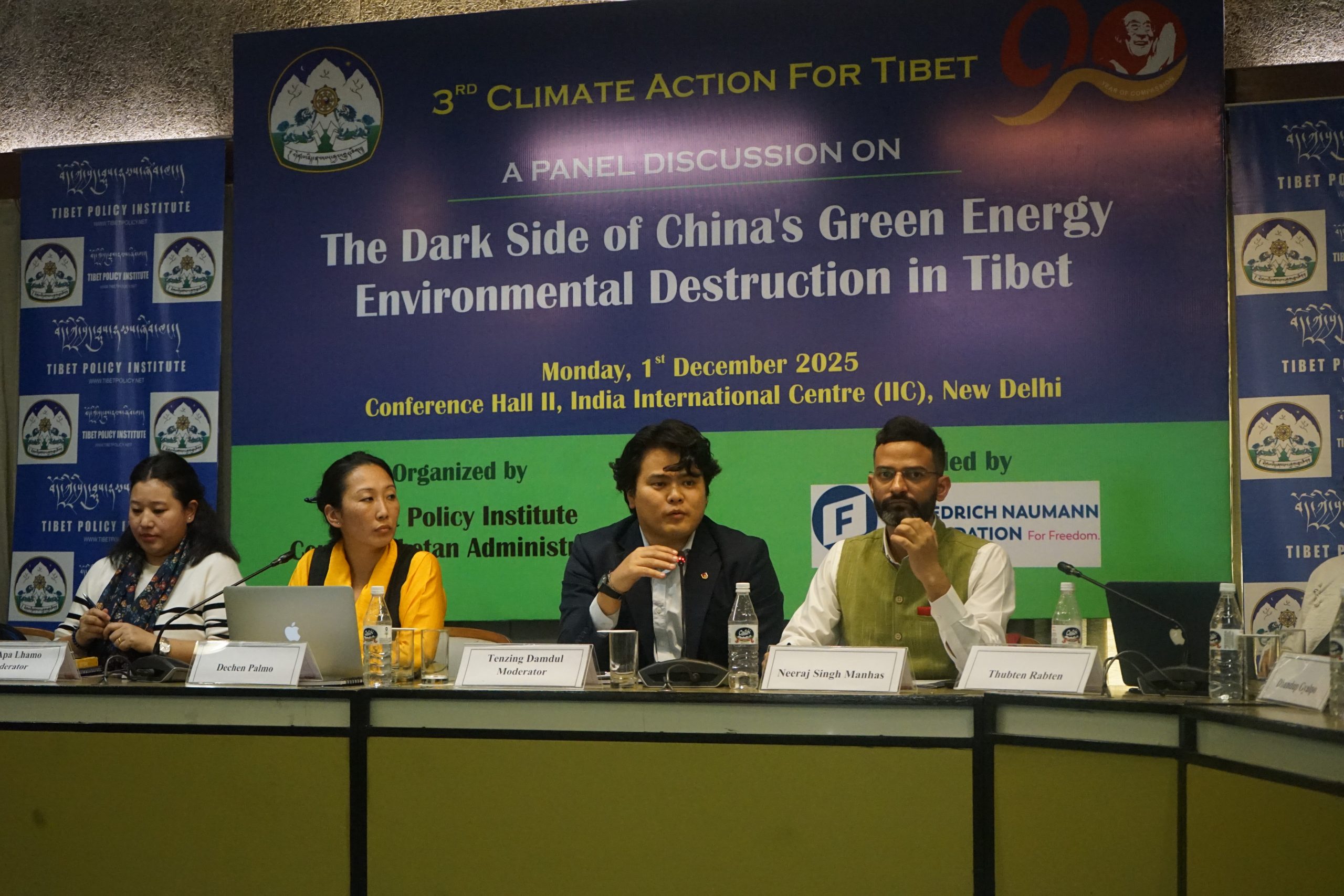 Neeraj Singh Manhas, Special Advisor for South Asia at the Parley Policy Initiative in South Korea, assessed how China’s control over river systems originating in Tibet affects India and other South Asian nations. He warned of long-term geopolitical tensions if China continues unregulated river diversions and water infrastructure projects.
 Revealing China’s Green Energy Contradictions
Speakers repeatedly emphasized a contradiction: China presents itself internationally as a leader in climate action, yet much of its progress is fueled by activities that are neither sustainable nor just.
Participants called for global recognition that any energy transition built on exploitation and environmental damage cannot truly be considered green. “Mining and dam construction marketed as ‘sustainable development’ are devastating Tibet’s plateau, stripping communities of their land and heritage,” one speaker noted. “Tibet’s mountains, rivers, and people are not expendable.”
 A Call for Global Attention
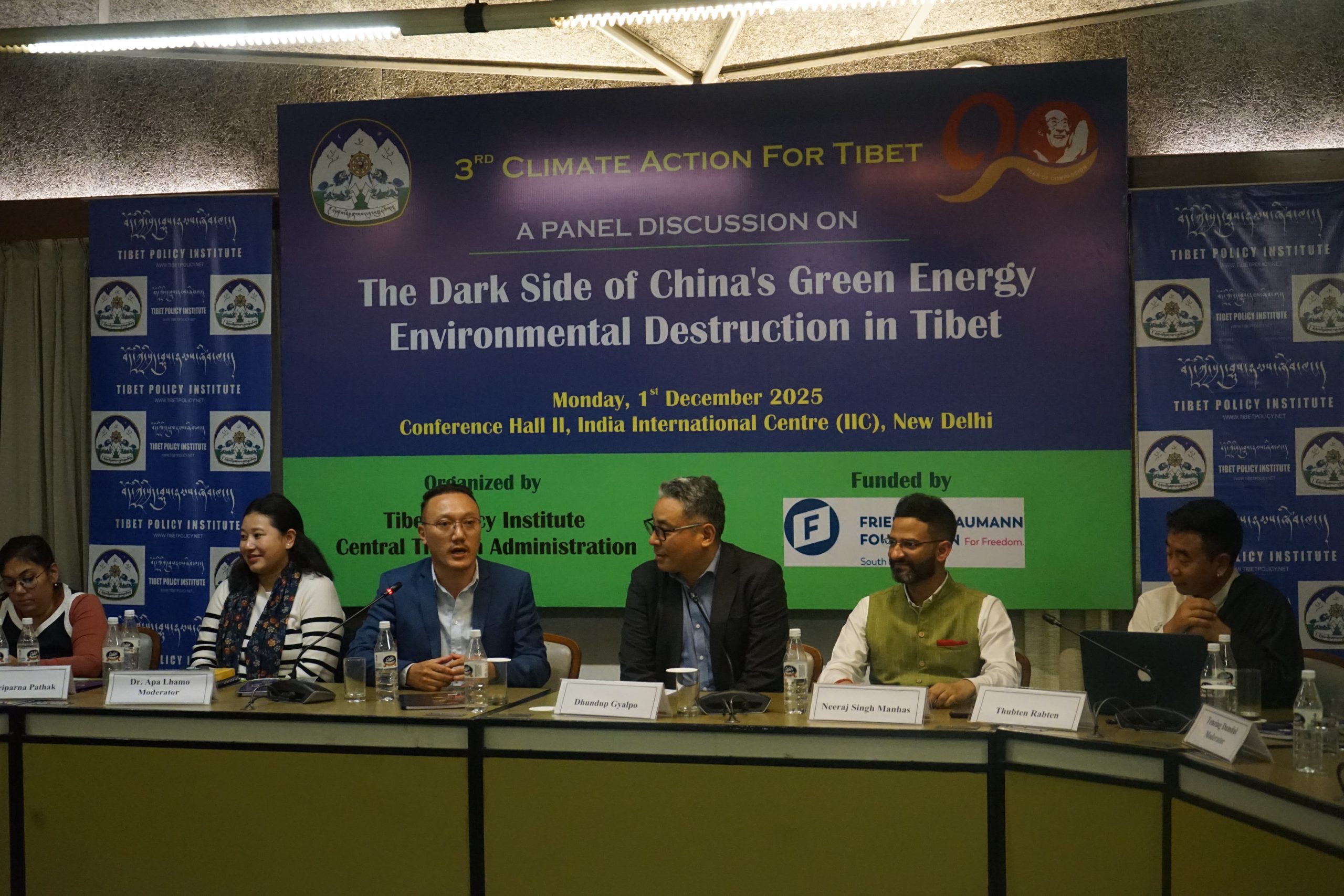
Delivering the concluding remarks, Dhundup Gyalpo, Secretary, Bureau of His Holiness the Dalai Lama, New Delhi, stressed the urgent need for Tibet to be recognized as a critical global climate issue.
“As the world embraces renewable technologies, it must also confront the hidden environmental and human costs embedded within their supply chains,” he said. “Green energy cannot be considered green if it is built on displacement and the destruction of one of the planet’s most fragile ecosystems.”
 The event follows earlier Climate Action for Tibet sessions held during COP21 in Paris (2015) and COP25 in Madrid (2019). Coming just two weeks after COP30 in Brazil, the Delhi forum sought to put Tibet squarely on the international climate agenda.