
Tibet stands at the forefront of China’s wind, solar , and hydropower . But the Tibetan
people have no say over how their resources are used.
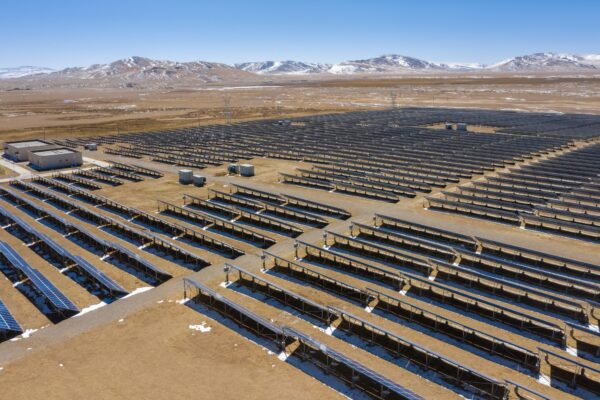
Amid the global shift to renewable energy, China leads the world in manufacturing and processing capacity. It is building major green infrastructure in Tibet, including large solar projects and the planned Metok (Ch: Motuo) mega-dam on the Yarlung Tsangpo. Many batteries used in clean technologies also depend on materials produced in the region. Tibet therefore stands at the forefront of China’s green energy development across hydropower, wind, and solar.
Recently, a newly identified chromite deposit was discovered in the Dongqiao region near Amdo Town in Amdo (Anduo) County, Nagchu (Naqu) Prefecture, adding 1.1463 million tons of associated chromite ore resources. The Luobusha mining area in Chusum (Qūsōng) County, Lhokha (Shannan) Prefecture, added another 738,300 metric tons of chromite resources. China has also identified a new source of high purity quartz in Tingkye (Chinese: Dinggyê) County, Shigatse City, aiming to reduce reliance on imports of this critical material used in solar panels and semiconductors, according to SCMP on June 8. This development reflects China’s accelerating exploration of strategic minerals in Tibet.
Critical minerals, which are increasingly becoming strategic resources, are abundant in Tibet. Tibet plays an important role in China’s copper supply chain and generates significant economic benefits. Some of the world’s largest mines under Chinese state control are located there, including the Yulong Copper Mine, which contains copper, molybdenum, iron, and gold. In 2024, Yulong’s copper production was approximately 159,100 metric tons. From January to September 2025, it produced 125,000 metric tons of copper. Its industrial output value reached 11.612 billion yuan in 2025, making it the first enterprise in Chamdo and the second in the so-called Tibet Autonomous Region to exceed 10 billion yuan in output value. The Julong copper mine in Tibet offers a similar example. Once its third phase is completed, it is projected to produce 350,000 tons annually, making it the largest standalone copper mine in China. Together, these developments show how rapidly the scale and pace of mining in Tibet have expanded in recent years.
China has also expanded mining in high-altitude areas that were previously difficult to access. One example is Zijin’s mining project, which has been made possible by technological advances at an elevation of around 5,000 meters above sea level. However, operating at such extreme elevation could cause serious environmental and social damage in the future.
While companies clearly profit from mineral extraction, an important question remains: where do these profits go?
China presents itself as a green energy powerhouse, a portrayal that has received global appreciation. The country is investing heavily in renewable technologies to meet its net-zero carbon goals, yet China remains one of the world’s leading consumers of coal. Furthermore, Isabel Hilton noted in a Yale Environment 360 analysis (March 26) that China’s dependence on coal has not fallen significantly despite record additions of wind and solar power. Instead, construction of new coal-fired power plants has increased. In 2024, about 93 percent of all new coal plants worldwide were built in China. This contradiction raises serious doubts about China’s so-called green energy claims.
China’s green energy transition therefore requires closer scrutiny, as the visible narrative does not capture the full reality.
Reuters recently noted that rising electricity demand from data centers in China and other sources has made it difficult for renewable energy alone to reduce carbon emissions, contributing to a renewed reliance on coal. As the report states, “the rise in coal usage highlights China’s challenge in decarbonising its power sector.”
The Khamtok Dege Dam, known in Chinese as Gangtuo, is located on the Drichu, the upper Yangtze River, and has already raised serious environmental and social concerns. According to the report, authorities arrested more than 1,000 Tibetans during protests against the project, which is expected to submerge six monasteries and displace at least 4,287 residents. Among the monasteries at risk is the eighth-century Wontoe Monastery, known for its fourteenth-century Buddhist murals. Despite these severe impacts, China continues to threaten Tibet’s ecological, cultural, and social landscape. Tsongon Tsering was reportedly suppressed for speaking out against illegal Chinese mining practices in Tibet. Soon after, mass arrests and a communication blackout occurred in Kham Zachuka following the discovery of gold deposits at Serkhok.
This is evident in China’s failure to follow the principles outlined in Critical Energy Transition Minerals, a document prepared by the UN Secretary-General’s Working Group on Transforming the Extractive Industries for Sustainable Development and issued in June 2025. The guidance emphasizes seven key principles for responsible resource extraction, including human rights, environmental protection, equity, and justice. In Tibet, however, these core principles are not being upheld.
This year, China released a new mining regulation consisting of eight chapters and 79 articles, scheduled to take effect on July 15. Yet the value of such a law remains questionable if the government does not genuinely enforce it in practice.
In addition to China’s hydropower expansion on the Yarlung Tsangpo, a river that originates in Tibet and flows into some of Asia’s most populous countries, solar power is also expanding rapidly across the region. The planned hydropower system would use the river’s dramatic 2,000-meter drop over a 50-kilometer stretch through tunnels and a series of five cascade hydropower stations. At the same time, the installation of solar panels across Tibet has accelerated sharply.
The expansion of solar farms is presented as beneficial for Tibet’s ecology. However, Sangay Tashi’s research suggests that it is difficult to definitively assess whether such projects are truly helpful. Instead, deep uncertainty remains about how this so-called progress may disrupt traditional cultural practices and ways of life in the future.
According to a study by Dr. Nityananda, Tibet’s unique geography gives it strong potential for solar farms and other renewable energy projects. Using the so-called Tibet Autonomous Region as case study, his mapping and analysis show that solar panels are expanding rapidly across Tibet. This growth, however, appears to be driven not only by clean technology goals but also by a broader policy agenda.
In conclusion, as China expands some of the world’s largest solar, hydropower, and wind projects, mineral exploration and extraction in Tibet are also intensifying. As China’s energy demand continues to rise, Tibet has the potential to play a significant role in China’s green energy supply chain. These developments pose serious environmental risks and carry significant social and geopolitical implications. Although China presents its green energy expansion as an environmental initiative, its sustained reliance on coal energy raises doubts about that claim. Rather than replacing fossil fuels, coal remains deeply embedded in China’s energy system. In this context, green energy appears to provide a justification for further unsustainable mining in Tibet, turning the region into a resource hub for China’s energy transition. If green energy is genuinely intended to support environmental protection, China should follow the guidelines issued by the United Nations, and Tibetan communities should be meaningfully consulted and their voices taken seriously.
*Mrs. Dhundup Wangmo, the author of the article, is a research fellow at the Tibet Policy Institute
PS: The views expressed here are of the author and do not necessarily reflect those of the Tibet Policy Institute
The article was originally published by the diplomat