
‘Tell China’s Story Well’ became, in the eyes of its critics, ‘Tell China’s Lies Well’, an effort to convince the world that everything in China is prosperous, progressive, and exemplary, from its civilization and development model to its vision of global leadership.
“You can fool some of the people all of the time, and all of the people some of the time, but you cannot fool all of the people all of the time.”
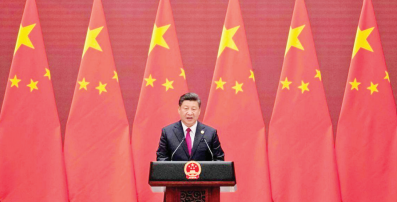
In 2013, soon after Xi Jinping became China’s supreme leader, he launched the official political and propaganda campaign “Tell China’s Story Well.” It became the core slogan of China’s external communication strategy. Its primary objective was to create a favourable international narrative and expand China’s global influence by portraying the country as a “credible, lovable and respectable China.”
For many years, the world approached China with caution while continuing to benefit economically from bilateral engagement and trade. Many governments remained indifferent, showing little interest in China’s problems or in criticizing its draconian rule over Tibet, East Turkestan, Southern Mongolia, Hong Kong, and serious human rights violations within China itself. Such attitudes were largely shaped by China’s insistence on the principle of non-interference in what it calls its internal affairs, a position many countries regarded as the least disruptive way to maintain and strengthen relations with Beijing.
Bluntly speaking, the world’s indifference and willingness to shake hands with China helped bolster the latter’s expanding influence in global diplomacy. This, in turn, enabled China to pursue increasingly assertive policies that many argue have infringed upon the sovereignty of other states.
During the COVID-19 pandemic, as the world suffered immensely, China shocked many nations with what they perceived as a series of misleading statements and contradictory narratives. Despite mounting criticism, Beijing intensified its efforts to shape global perceptions, promoting its narratives forcefully and consistently. The messaging was loud enough to confuse many, while also prompting others to recognize China’s broader ambition to restore what it views as its rightful place at the centre of global affairs. In this sense, “Tell China’s Story Well” became, in the eyes of its critics, “Tell China’s Lies Well”—an effort to convince the world that everything in China is prosperous, progressive, and exemplary, from its civilization and development model to its vision of global leadership. Whether China will ultimately succeed in presenting its carefully curated narrative, while concealing the harsher realities of repression and increasingly confrontational policies, remains to be seen.
Amid growing international scrutiny, China’s so-called “Wolf Warrior” diplomats, such as Qin Gang and Zhao Lijian, emerged with aggressive and uncompromising rebuttals to criticism from all directions. Their combative rhetoric was undoubtedly encouraged and carefully calibrated under Beijing’s direction. Qin Gang’s sudden elevation to the position of Foreign Minister appeared to symbolize the dominance of Wolf Warrior diplomacy, although his tenure proved remarkably short, as he disappeared from public view after serving only a few months.
The world may still underestimate China’s long-term ambitions, but China has been serious about reshaping global geopolitics by promoting an alternative vision of international order in which it presents itself as a global power. This vision is reflected in Xi Jinping’s Global Development Initiative (GDI), launched in 2021; the Global Security Initiative (GSI), launched in 2022; and the Global Civilization Initiative (GCI), launched in 2023. In 2026, China further articulated its vision for global governance through the publication of its white paper, More Just and Equitable Global Governance: China’s Principles, Proposals and Actions. These initiatives largely target the Global South and Small States by emphasizing sovereignty, non-interference, and respect for different political systems. While presented as platforms for cooperation, dialogue, exchange, and partnership, it ultimately serve China’s strategic interests. Sri Lanka’s Hambantota International Port remains one of the most frequently cited examples of China’s expanding influence and coercive diplomacy.
Facing enormous international challenges, China has increasingly organized conferences, forums, and exchange programs both within China and in China-occupied Tibet, inviting hundreds of participants from around the world to promote the narratives of a “vibrant China” and a “vibrant Tibet.” Individuals such as Victor Gao may serve as prominent public defenders of China’s positions, but Beijing is simultaneously investing considerable effort in crafting more sophisticated and credible international narratives.
While remaining assertive, China appears to rely less on overtly confrontational rhetoric than it did during the height of Wolf Warrior diplomacy. Instead, it has adopted more refined communication strategies, using innovation to enhance its international messaging. From identifying targeted audiences to producing tailored content, China has expanded its presence across multiple communication platforms, including social media. At the same time, it has devoted significant resources to engaging politicians, scholars, media organizations, and broader audiences in an effort to amplify its narratives and perspectives across the world.
Internationally, China continues to seek a greater role in setting global agendas on issues ranging from green energy and security to trade and technology. From Mao Zedong’s Hundred Flowers Campaign to Xi Jinping’s Thousand Talents Plan, China has consistently pursued strategies aimed at strengthening its scientific and technological capabilities, contributing to its growing global prominence. More recently, China’s advances in artificial intelligence have become an important component of its international communication strategy through the development of AI-enabled communication technologies.
Years ago, China’s late paramount leader Deng Xiaoping stated that any issue other than Tibet’s independence could be discussed. This opened the door for talks between the envoys of His Holiness the Dalai Lama and Chinese leaders. However, that dialogue has now been stalled for more than a decade. Tibet remains one of China’s most politically sensitive subjects. Driven by concerns over stability and deeply rooted fears of losing control, Chinese leaders have become increasingly cautious and resistant to meaningful change. Yet change remains an inevitable law of nature, and prolonged rigidity may eventually take a toll on China.
Within the complexities of China’s uncompromising position on Tibet and an evolving international environment, Beijing’s fear of losing Tibet has become deeply intertwined with its sense of national pride, leading it to designate Tibet as one of its core national interests.
To reinforce its narrative on Tibet, China has showcased massive infrastructure projects—including expressways, railways, tunnels, bridges, dams, and greenhouse developments—as evidence of modernization and progress. Conversely, policies such as the forced relocation of Tibetans into closely monitored so-called model villages have been portrayed as signs of development and poverty alleviation. The transformation of Tibet’s once-pristine environment through mining operations and the creation of artificial parks has likewise been presented as environmental protection. The controversial colonial-style boarding schools in Tibet have been portrayed as nurturing young minds while serving China’s broader project of cultural homogenization.
At the same time, numerous social media influencers have been mobilized to promote Beijing’s narrative of a “vibrant Tibet”. The most recent Ethnic Unity and Progress Law is a sugar-coated poison that seeks to erase the very essence of Tibetan identity. In reality, the genuine aspirations and voices of Tibetans remain largely unheard.
The recent evolution of China’s international communication strategy reflects its determination to preserve both domestic legitimacy and international influence. China’s carefully crafted stories may appear attractive, colourful, and inspiring, but beneath the polished narratives lie accounts of enormous repression, human suffering, and unresolved grievances that deserve equal attention. It is therefore not enough for China merely to tell China’s story well; it is far more important that it tell the true story.
Tenzin Lekshay is the Executive Director of Tibet Policy Institute and the official Spokesperson of the Central Tibetan Administration, based in Dharamshala, India.
PS: The views expressed here of the author and do not necessarily reflect those of the Tibet Policy Institute.
The original article was published by Sunday Guardian