
Across Asia’s river basins, upper-riparian infrastructure proceeds unilaterally, without consultation to downstream states. China’s mega-dam in Tibet is just the latest example.
By Tenzin Dolma
November 20, 2026
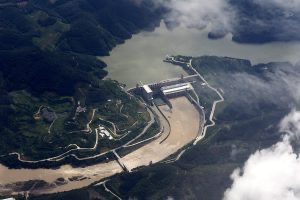
China is building the world’s largest hydropower project on the Yarlung Tsangpo River in Tibet, designed with a massive 60,000-megawatt capacity. Construction was formally launched in July 2025, much to the consternation of people across the border in India.
“China has already begun construction of a dam in Medog County, around 40 km from the border… without consulting us or sharing any information,” warned Chief Minister Pema Khandu of Arunachal Pradesh. He called China’s $167 billion mega-dam in a seismically active zone an existential potential “water bomb.”
The Medog dam is not an isolated incident. It’s just one sign of a larger crisis extending across Asia’s river basins, where downstream nations face upper-riparian infrastructure that proceeds unilaterally, without environmental impact disclosures, binding legal frameworks, or genuine transboundary consultation and governance.
Downstream states urgently need a collective voice, built on shared demands for data and transparency.
Known as the “Water Tower of Asia,” Tibet is the source of 10 major transboundary river systems that flow into 10 downstream nations. These vital waterways sustain ecosystems, agriculture, and the livelihoods of 1.8 billion people across South and Southeast Asia, nearly one-quarter of the global population. No other single territory matches this human impact in supplying transboundary freshwater to densely populated downstream nations. That gives Tibet an unparalleled position in global hydrology.
Tibet also stores more freshwater than any place on earth apart from the two poles, which is why it is often referred to as the Third Pole of the planet. However, Tibet faces a dual crisis: it is warming at roughly twicethe global average while its high-altitude environment is also continually battered by mining, deforestation, and industrial activity – a combination that threatens the stability of Asia’s major rivers.
Tibet’s glaciers, permafrost, wetlands, lakes, and high-altitude ecosystems regulate water availability and influence downstream hydrological and ecological processes. Large-scale damming on these rivers, much of it is in highly seismic terrain and without transparency or treaty frameworks, deepens downstream uncertainty over water flows and flooding risks that cross borders.
China rejects these concerns outright. Foreign Ministry spokesperson Guo Jiakun stated that China has carried out cooperation with downstream countries and has had necessary communication with them. The spokesperson for the Chinese Embassy in India, Yu Jing, insisted that the dam project on the Yarlung Tsangpo will not have a negative impact on the ecological environment, geological conditions, and the rights and interests related to water resources of downstream countries. Rather, she claimed that it will “to some extent, help with their disaster prevention and reduction and climate response.”