Dharamshala: The Tibet Policy Institute (TPI), based in Gangchen Kyishong, hosted a book launch this morning attended by Kalon (Minister) Dolma Gyari of the Central Tibetan Administration’s Department of Security. The event formed part of TPI’s programmes marking the Ghoton celebration in honour of His Holiness the Dalai Lama’s 90th birthday.
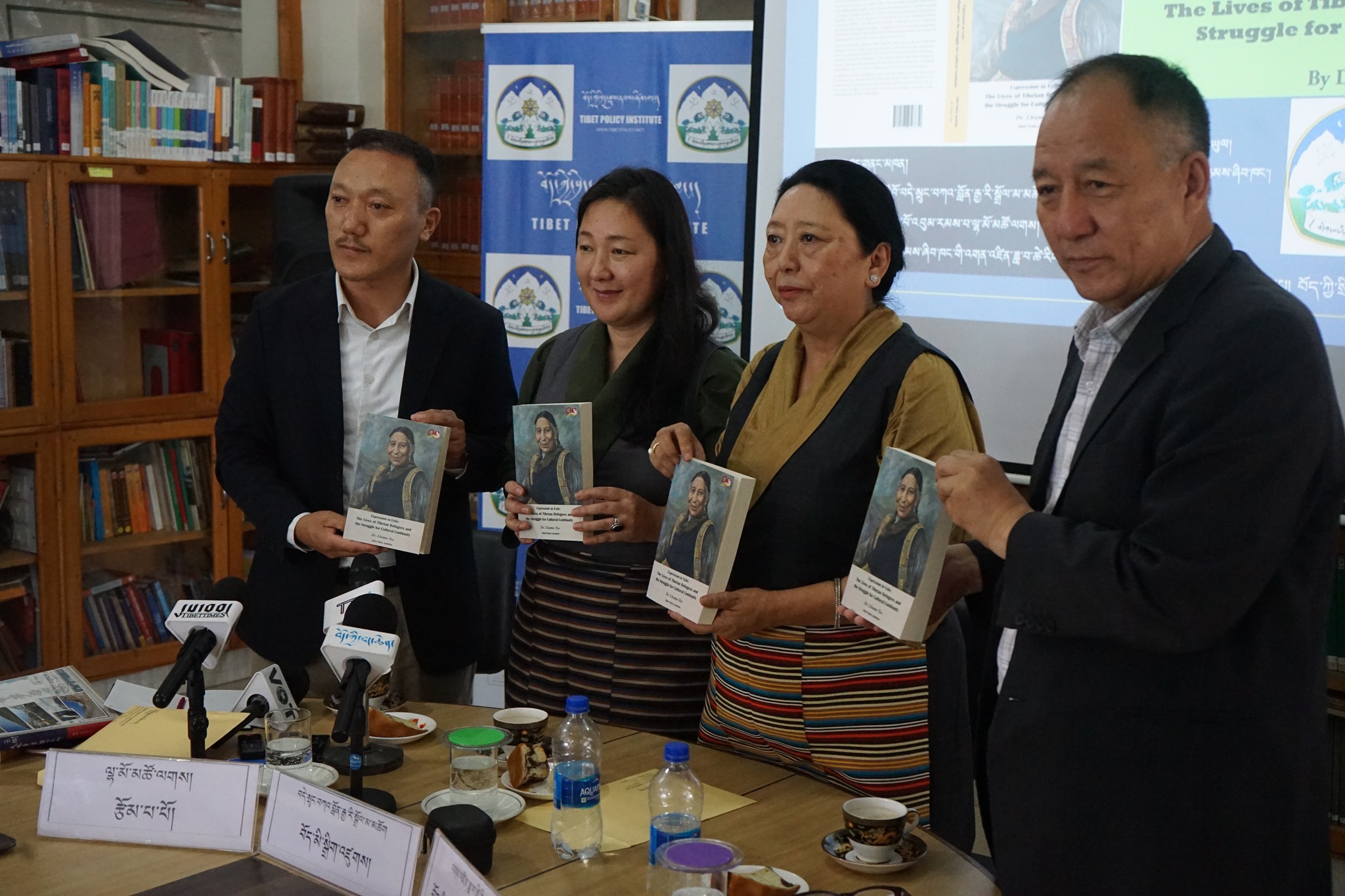
The publication, Expression in Exile: The Lives of Tibetan Refugees and the Struggle for Cultural Continuity, brings together six insightful articles that pay tribute to the vast spiritual legacy and visionary leadership of His Holiness, as well as the resilience and contributions of the Tibetan people—particularly Tibetan women in exile.
Written by Dr. Lhamo Tso, Assistant Professor of Tibetan Studies at the Dalai Lama Institute for Higher Education in Bangalore, the book captures diverse experiences within the Tibetan diaspora.
Opening the event, TPI Deputy Director Tempa Gyaltsen Zamlha welcomed guests, followed by remarks from TPI Director Dawa Tsering, who explained the institute’s aim in publishing the work. “With more Tibetan scholars producing important research independently, TPI recognises the value of institutional support to ensure their insights reach a wider audience,” he said. He added that, alongside in-house research, TPI seeks to compile and share works reflecting the perspectives of Tibetan scholars to deepen public understanding within the exile community and to present such research internationally alongside contributions from non-Tibetan academics.
Dr. Lhamo Tso then summarised each chapter, which explores topics including the cultural symbolism of the hari ornament—most notably the one worn by Gyalyum Chenmo, mother of His Holiness the Dalai Lama; the landmark conferral of the Geshema degree to nuns in exile; the evolving role of Tibetan women in leadership and social participation; the resilience of the Tibetan Buddhist community in sustaining peace and creativity in exile; an analysis of the Lhasa Sweater Market in Varanasi; and the lived experiences of Tibetan refugees in India during the COVID-19 pandemic.
Delivering the keynote, Kalon Dolma Gyari praised TPI for its initiative and commended the author for her scholarship. “You are among the Tibetan women I pay special attention to for their knowledge and capability,” she remarked, noting that the book provided her with new insights even on subjects she thought she understood well. She highlighted the lack of literature on Gyalyum Chenmo and encouraged more research, describing the chapter on her life as both valuable and accessible to readers of all backgrounds.
The Kalon further lauded the book’s examination of the gradual transformation of Tibetan women’s roles in advocacy and leadership, attributing this progress to the inclusive vision of His Holiness the Dalai Lama. Reflecting on the Geshema degree, she acknowledged that despite His Holiness’ progressive intent, the Central Tibetan Administration itself has sometimes moved cautiously, delaying reforms.
Concluding her address, Kalon Dolma Gyari expressed appreciation to all Tibetan scholars and researchers for illuminating underexplored aspects of Tibetan history and life, delivering her remarks on behalf of the 16th Kashag, led by Sikyong Penpa Tsering.