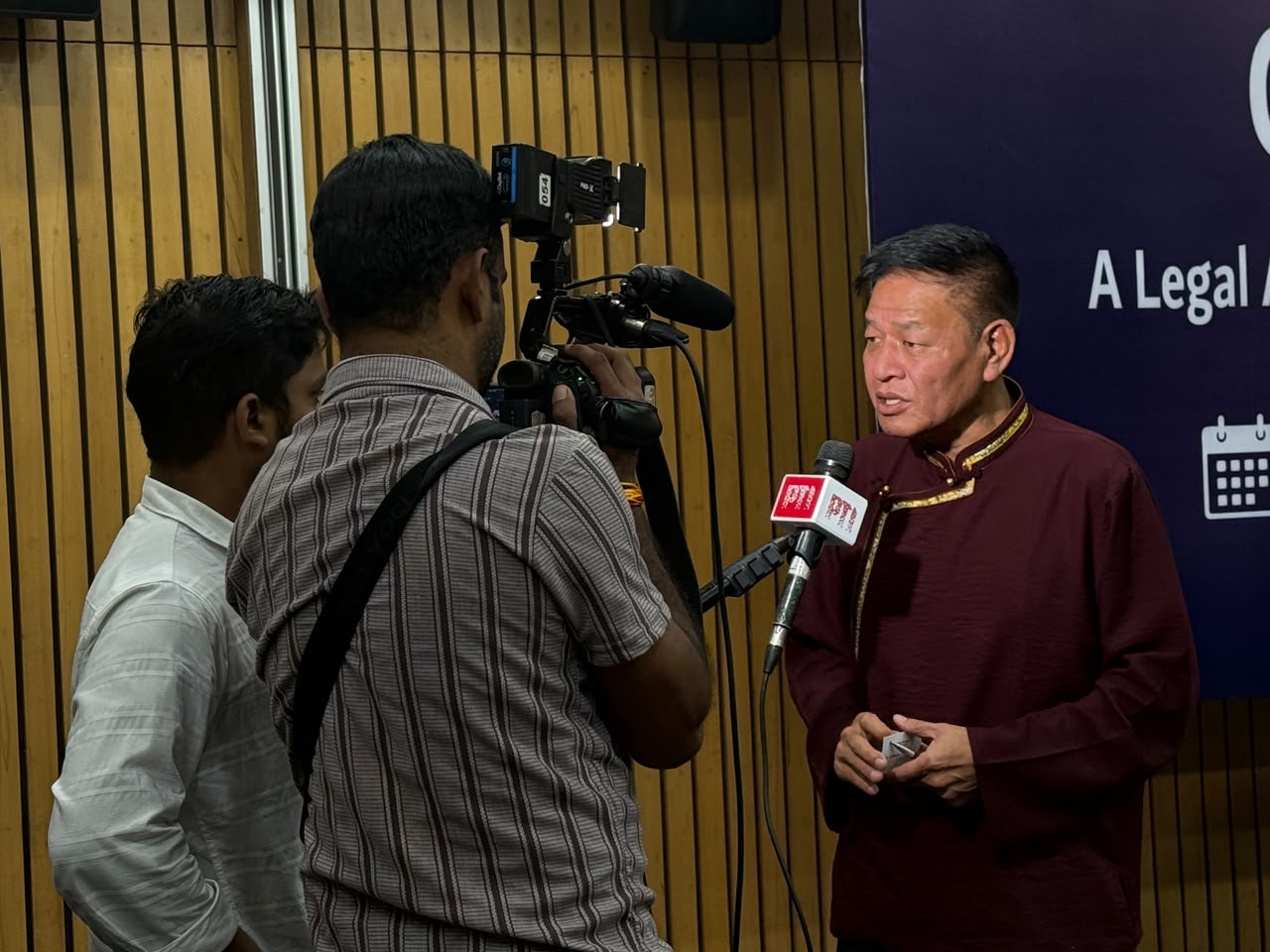
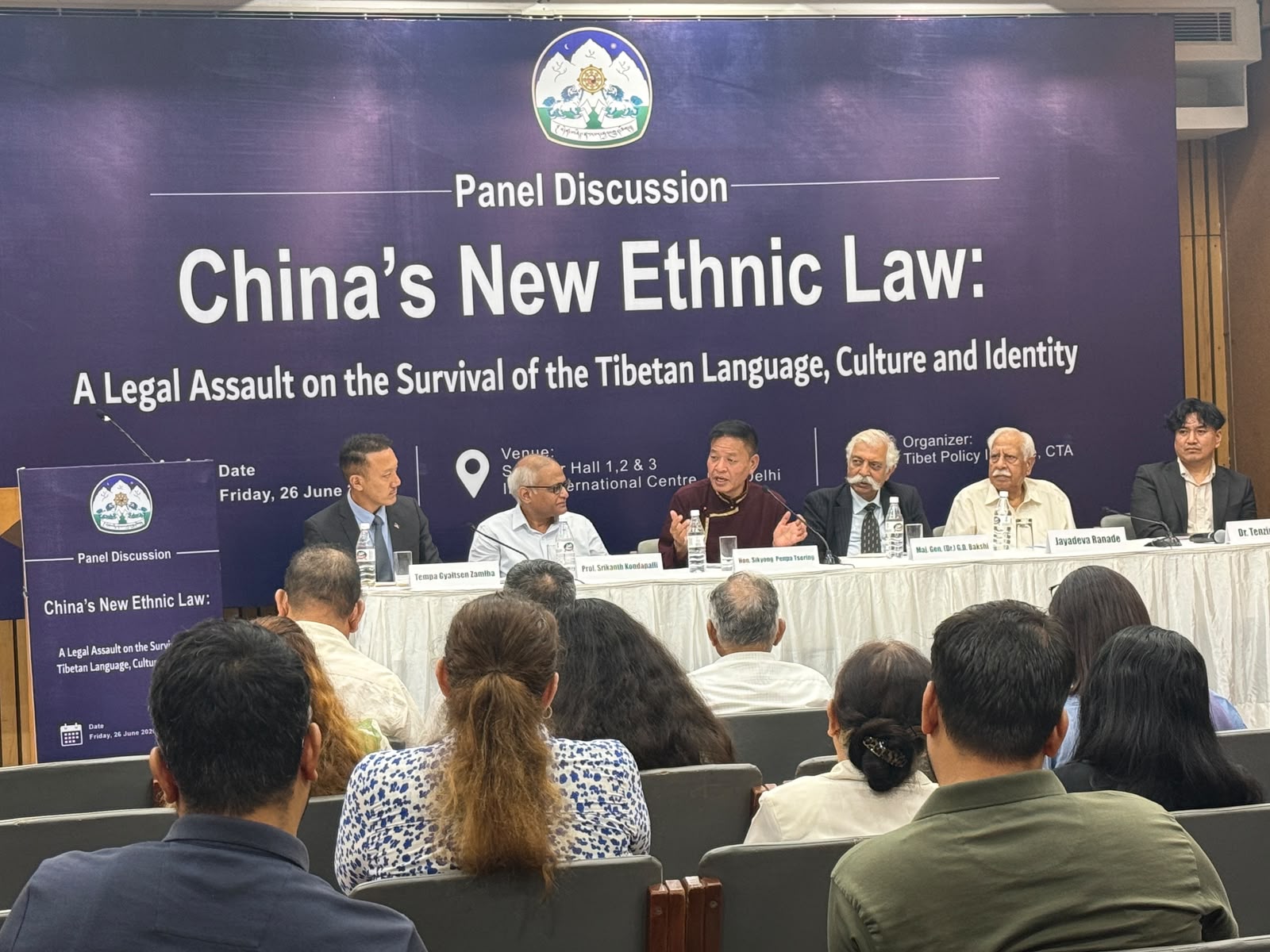
 The Tibet Policy Institute (TPI) convened a high-level panel discussion titled “China’s New Ethnic Law: A Legal Assault on the Survival of the Tibetan Language, Culture, and Identity” at the India International Centre, New Delhi, on Friday. The discussion brought together policymakers, scholars, China experts, and strategic affairs analysts to examine the implications of the People’s Republic of China’s new Law on Promoting Ethnic Unity and Progress, which will come into force on 1 July 2026. The discussion critically examined the far-reaching implications of the People’s Republic of China’s Law on Promoting Ethnic Unity and Progress, which is scheduled to come into effect on 1 July 2026.
While Beijing portrays the legislation as a measure to strengthen national unity and social cohesion, the panelists unanimously argued that it provides a comprehensive legal framework for institutionalizing assimilation and accelerating the Sinicization of Tibet. They asserted that the law represents a significant escalation in the Chinese Communist Party’s efforts to reshape Tibetan identity through legal and administrative means.
The session was moderated by Tempa Gyaltsen Zamlha, Deputy Director of the Tibet Policy Institute. Opening remarks were delivered by Sikyong Penpa Tsering, followed by presentations from Major General (Dr.) G.D. Bakshi (Retd.), Jayadeva Ranade, President of the Centre for China Analysis and Strategy, and Dr. Tenzin Desal, Senior Fellow at the Tibet Policy Institute. The discussion concluded with closing remarks by Professor Srikanth Kondapalli of Jawaharlal Nehru University.
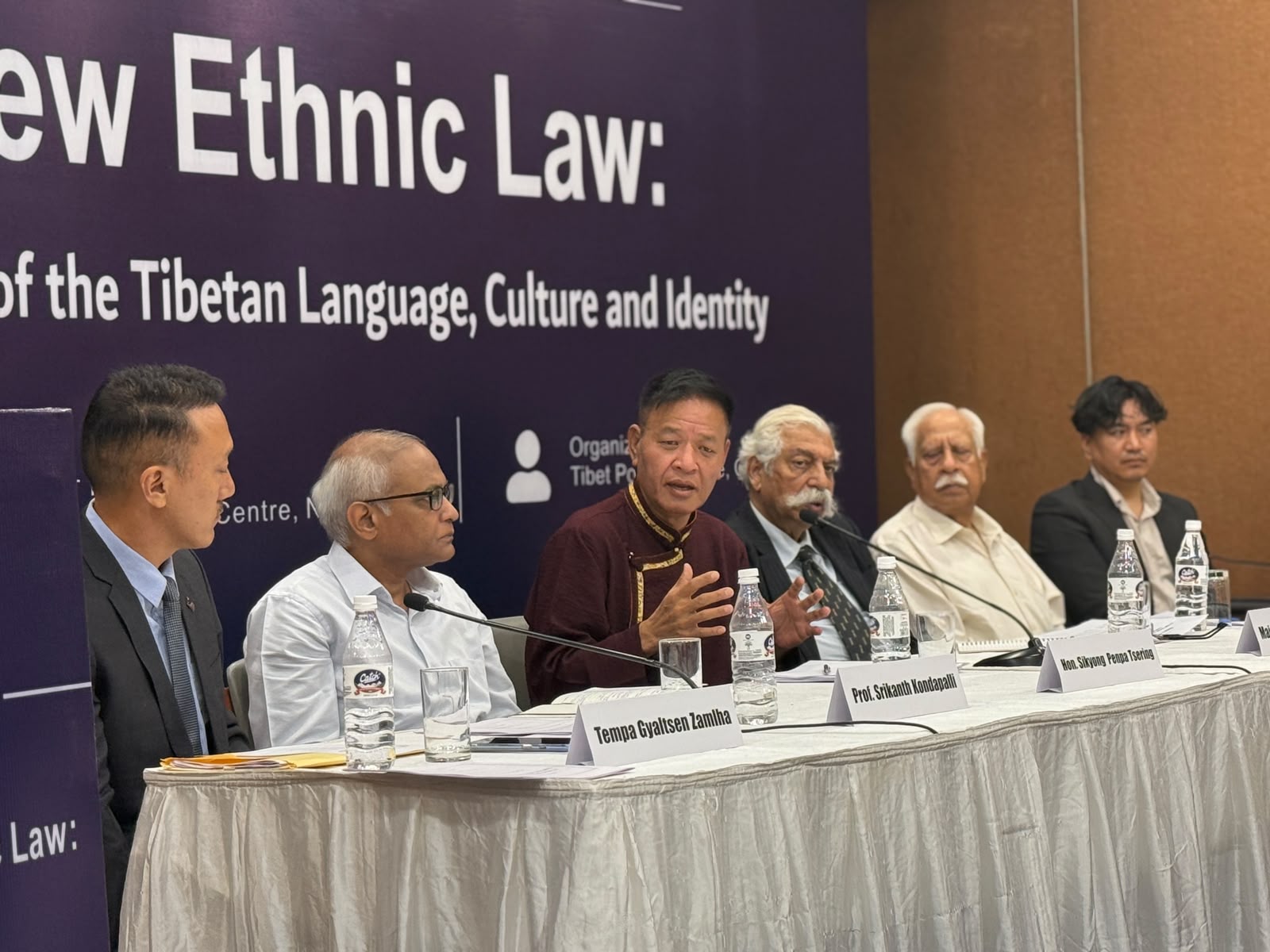 In his keynote address, Sikyong Penpa Tsering described the new law as the culmination of decades of Chinese administrative campaigns, transforming them into permanent legal obligations. He argued that the legislation codifies the Chinese Communist Party’s pursuit of a singular “Zhonghua Minzu” national identity at the expense of Tibet’s distinct language, religion, and cultural heritage. He further contended that the law contradicts both China’s constitutional guarantees and the commitments made under the Seventeen-Point Agreement. Reaffirming the Central Tibetan Administration’s commitment to the Middle Way Approach, he emphasized that lasting stability cannot be achieved through cultural erasure or forced assimilation.
Major General (Dr.) G.D. Bakshi (Retd.) contrasted India’s pluralistic civilizational ethos with China’s model of cultural homogenization, warning that the new legislation poses an existential threat to Tibet’s linguistic, religious, and cultural identity.
Jayadeva Ranade traced the origins of the policy to the 2016 reforms that expanded the authority of the United Front Work Department. He outlined a three-stage strategy comprising intensified surveillance, the political restructuring of Tibetan Buddhism under “Chinese socialist characteristics,” and the systematic erosion of the Tibetan language, arguing that the new law legally reinforces each of these processes.
Dr. Tenzin Desal situated the legislation within the broader historical trajectory of Chinese policy toward Tibet, beginning with the Seventeen-Point Agreement. He argued that the law seeks to sever intergenerational cultural transmission, weaken the continuity of Tibetan identity, and further isolate Tibetans inside Tibet from those living in exile. He also noted that Beijing’s sustained prioritization of internal security expenditure over external defence underscores its enduring concern over maintaining political control in Tibet.
In his concluding remarks, Professor Srikanth Kondapalli synthesized the panel’s key findings, linking the new legislation to existing mechanisms of state control, including the Strike Hard Campaign, mass forensic data collection, and the Double-Link Household System. Citing the decline in Tibet’s nomadic population—from approximately 40 percent to between 10 and 15 percent—he argued that the law forms part of a broader strategy aimed at fundamentally transforming Tibetan society. He called upon scholars, policymakers, and researchers to challenge official narratives through rigorous, evidence-based research and sustained international engagement.
The event concluded with an interactive question and answer session, during which members of the media, academics, researchers, and participants engaged the panelists in a substantive discussion on the legal, political, and human rights implications of China’s new ethnic law and its impact on the future of Tibet.
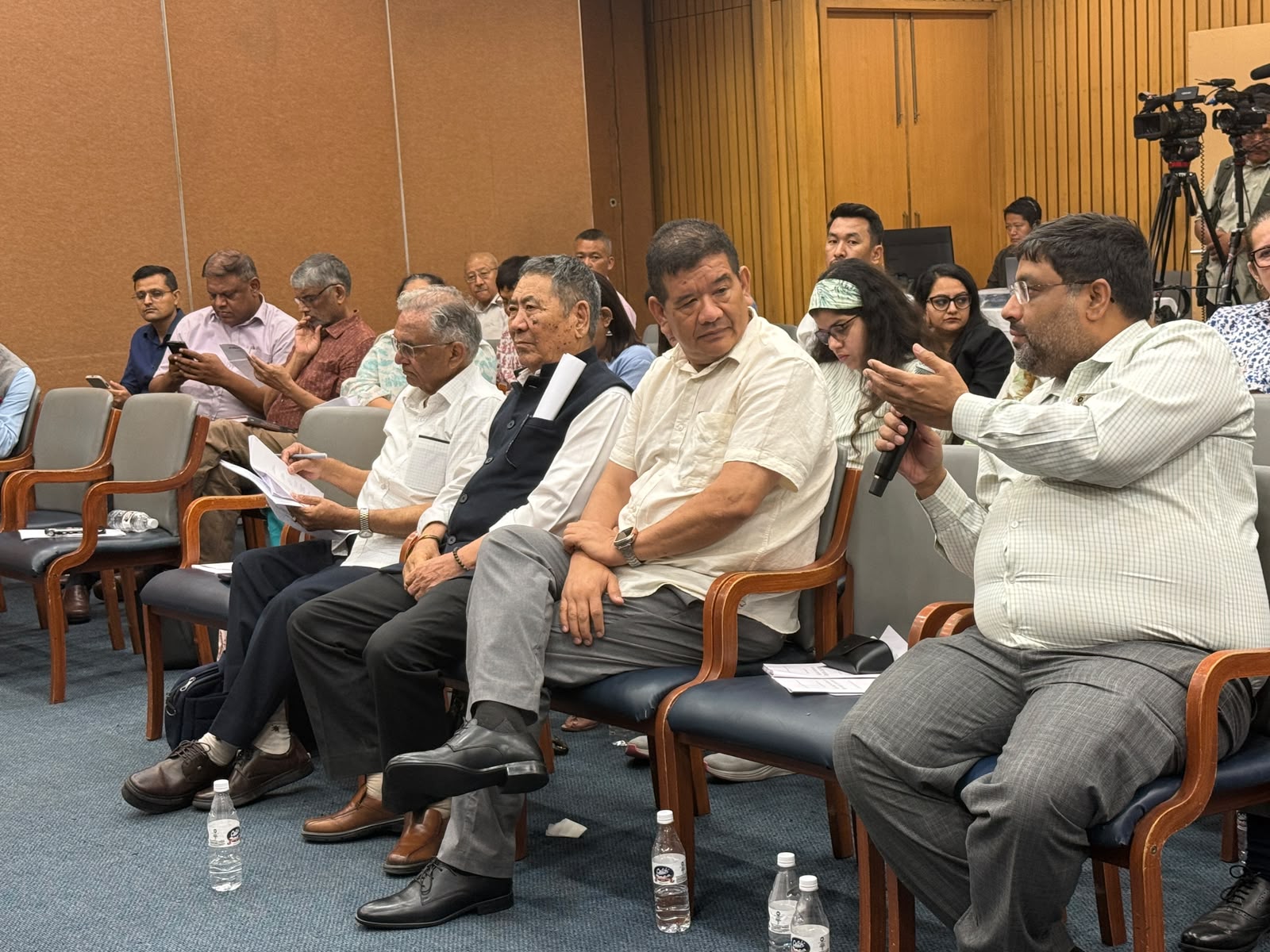 Panel Discussion on China’s New Ethnic Law and Its Impact on Tibet New Delhi, 26 June 2026