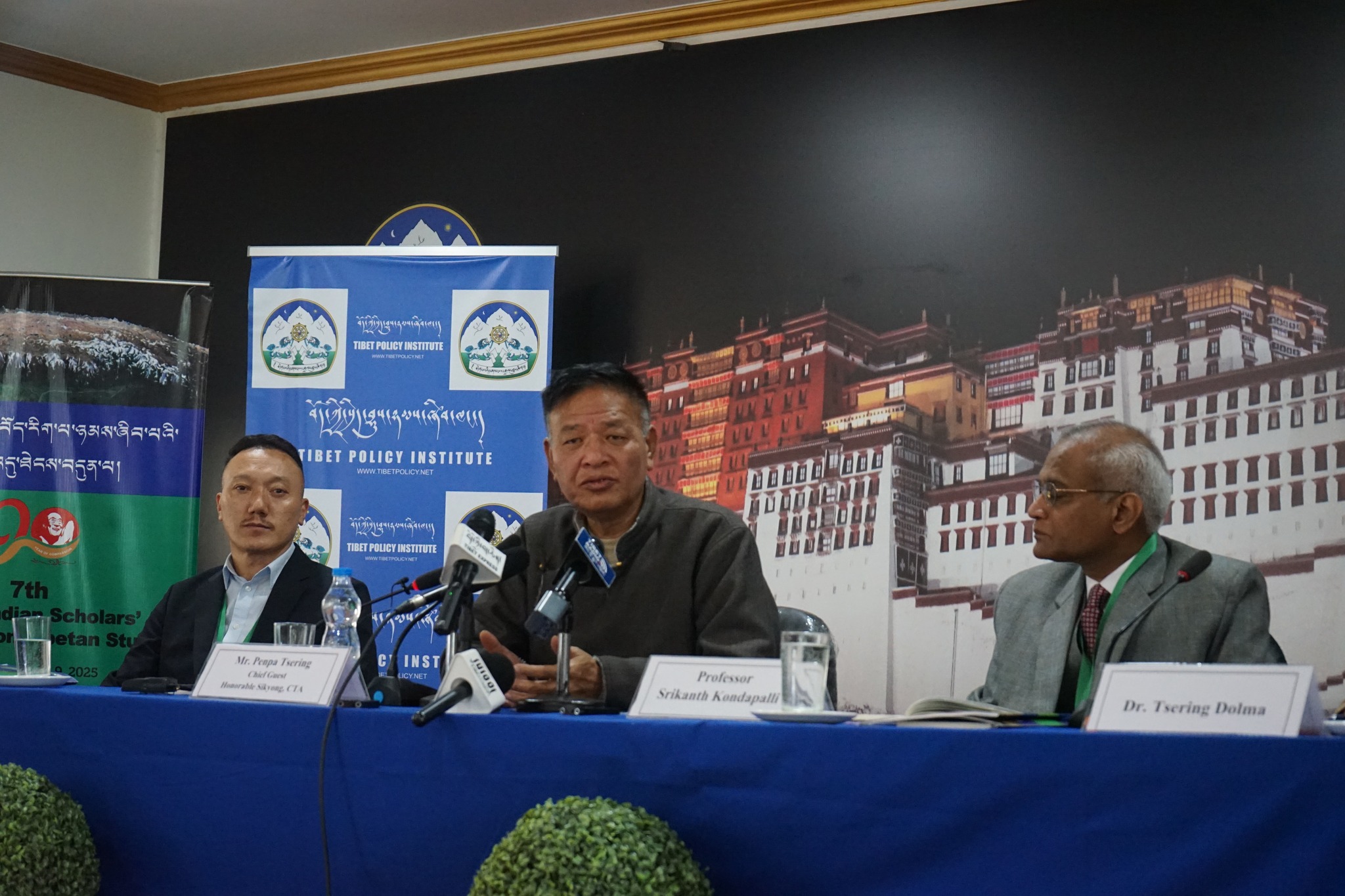
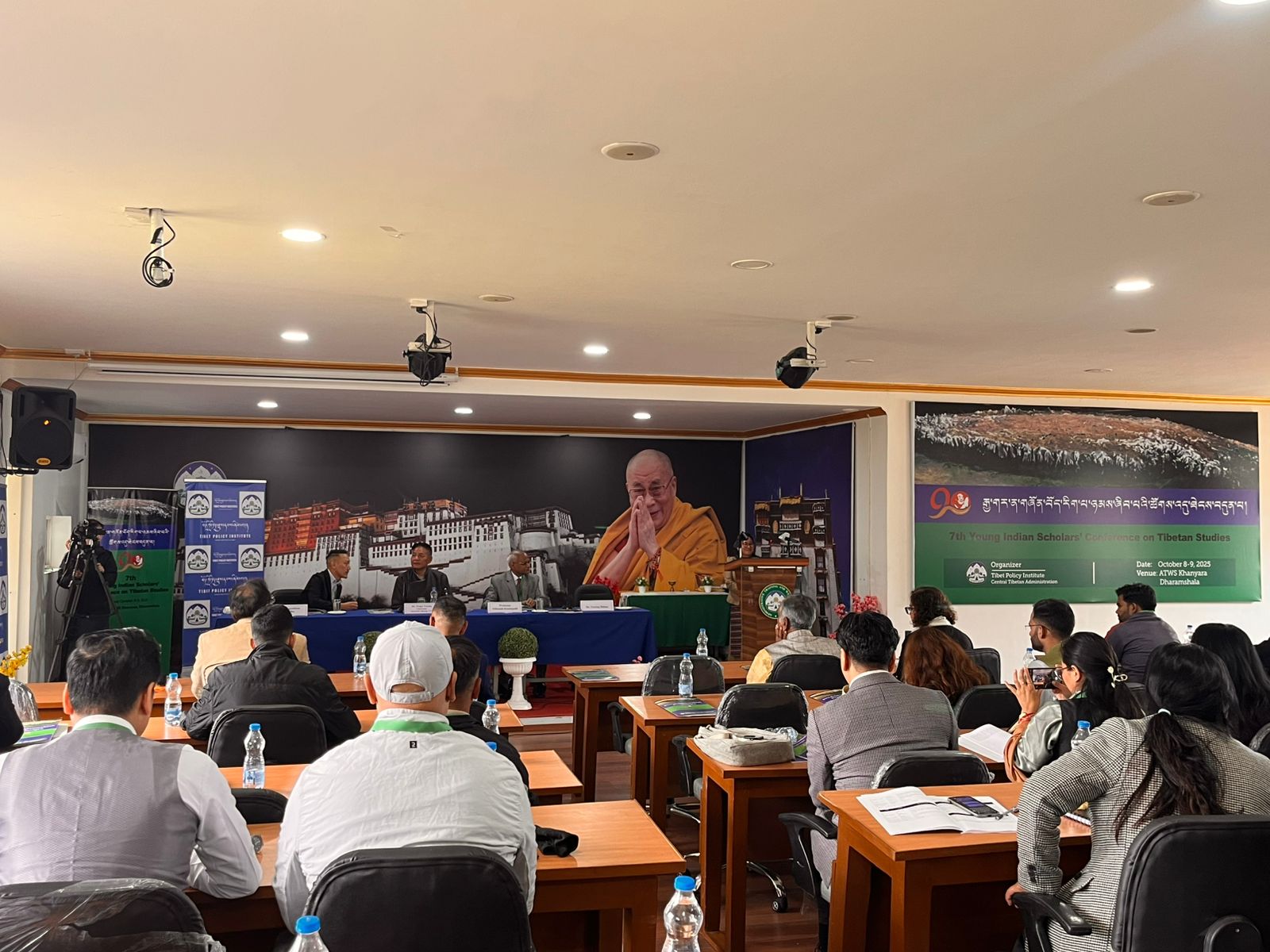
 The two-day ‘7th Young Indian Scholars’ Conference on Tibetan Studies’, organized by Tibet Policy Institute opened on 8 October 2025, here in Dharamshala, with Sikyong Penpa Tsering as the chief guest. The conference saw gathering of more than 30 Indian scholars to present their research finding at the prestigious scholarly confernece.
Dr. Tsering Dolma, the conference coordinator, served as master of ceremonies. In his welcome remarks, Tempa Gyaltsen Zamlha, Deputy Director of the Tibet Policy Institute (TPI), greeted the chief guest and delegates and outlined the programme: over two days, young scholars will present research on Tibet’s history, culture, environment, geopolitics, and India–Tibet relations. He described the conference as an important forum for Indian scholars to exchange ideas and deepen academic engagement with Tibetan studies.
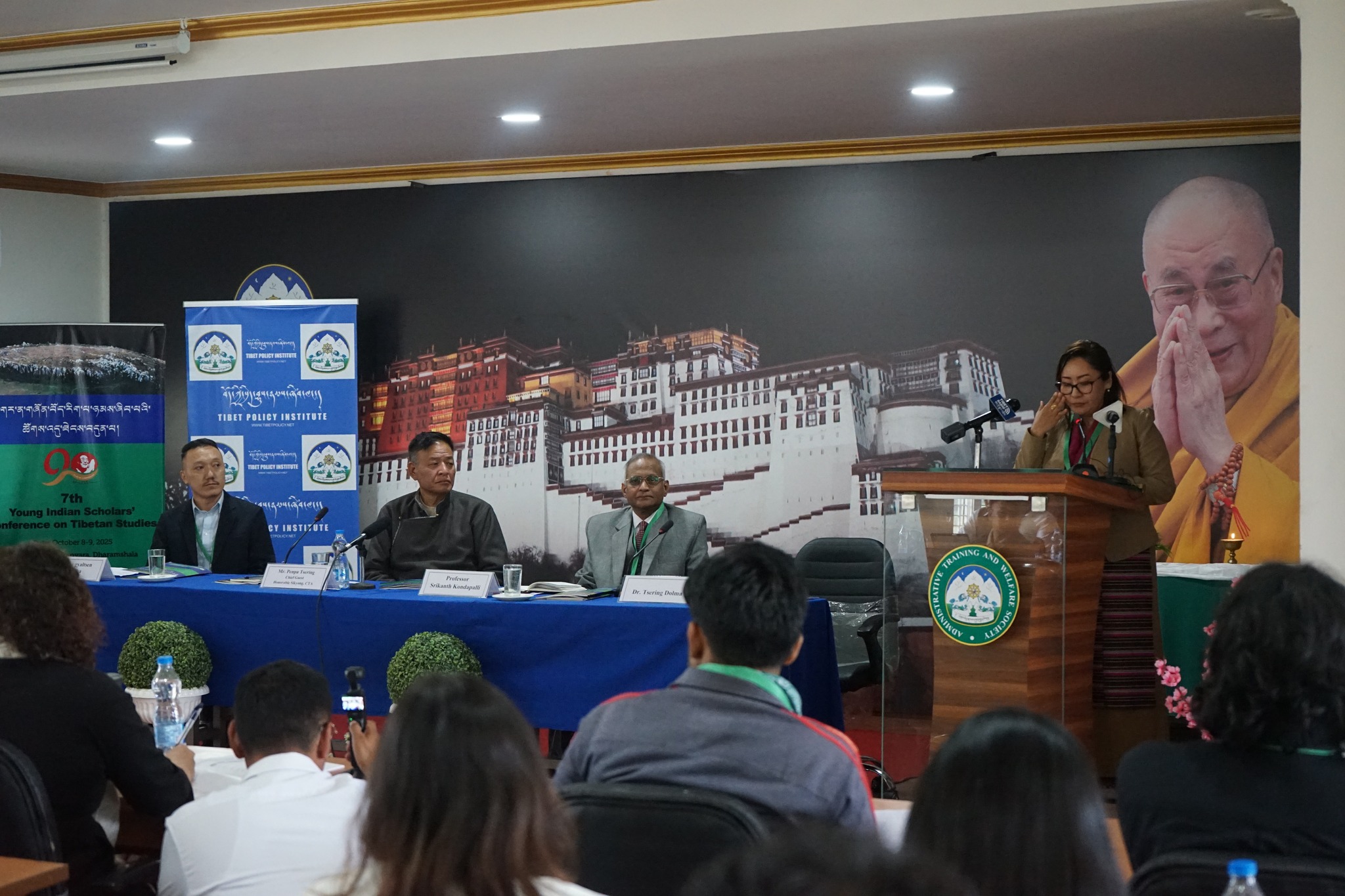 The conference was formally inaugurated by Sikyong Penpa Tsering, who emphasised the importance of scholarly engagement in advancing Tibetan studies among emerging Indian researchers. Praising the Tibet Policy Institute for convening the event, he highlighted the institute’s role in promoting intellectual exchange and building a deeper understanding of Tibet’s historical, cultural and geopolitical significance. He stressed that rigorous academic work is essential to counter misinformation about Tibet and to preserve an accurate historical record.
In his address, Sikyong traced the evolution of the Middle Way Policy. He explained that following China’s occupation of Tibet, the Tibetan movement in exile initially sought full independence (1959–1974). Under the guidance of His Holiness the Dalai Lama, however, Tibet’s leadership later adopted the Middle Way approach, which seeks genuine autonomy for Tibet within the framework of the People’s Republic of China. This approach, he noted, was adopted by consensus in the Tibetan Parliament-in-Exile and remains the official position of the Central Tibetan Administration.
Sikyong said the CTA is now renewing its emphasis on asserting Tibet’s historical status as an independent polity as a means to reinforce the legitimacy and moral grounding of the Middle Way Policy. He identified two pillars of the CTA’s political stance: Tibet’s historical independence and its continuing occupation by a repressive Chinese regime.
“When His Holiness the Dalai Lama speaks of the Middle Way, it is a call for a peaceful solution — neither separation nor acceptance of repression,” Sikyong said. “But in the absence of a meaningful response from Beijing, we must buttress our position by seeking international acknowledgement of Tibet’s past independence.”
He added that in meetings with governments, NGOs and parliamentary groups worldwide, the CTA consistently raises concerns about the deteriorating human rights situation inside Tibet, aiming to keep Tibet an issue of international concern and moral responsibility.
 Referring to recent U.S. legislation, Sikyong welcomed the Resolve Tibet Act, which he said rejects Beijing’s claim that Tibet has been historically part of China. He noted that the Act affirms the territorial definition of Tibet as comprising the three traditional provinces — U-Tsang, Kham and Amdo — and encourages collaboration with like-minded countries to counter Chinese disinformation about Tibetan history. He acknowledged the extensive diplomatic effort required to secure the bill’s passage in both houses of the U.S. Congress.
Drawing a parallel between Tibet and Ukraine, Sikyong observed that the world’s response to the invasion of Ukraine mirrors events that unfolded in Tibet more than seven decades ago. He recalled that Tibet was invaded and compelled to sign the 17-Point Agreement in 1951 under duress — a breach of international norms, he said — and reiterated that historical facts cannot be rewritten by force.
Sikyong also reflected on conversations with U.S. Council officials and discussed how China seeks to politicise Tibetan Buddhism. He urged international audiences to better understand Tibetan religious practices, including the reincarnation tradition, to dispel misconceptions and appreciate their spiritual and cultural significance.
Concluding his remarks, Sikyong called on young scholars to intensify research into Tibetan religion, culture and history, arguing that rigorous academic work can provide evidence to the international community of Tibet’s historical independence. He appealed for global support for the Middle Way Approach and solidarity with the Tibetan people in their peaceful pursuit of genuine autonomy and identity preservation.
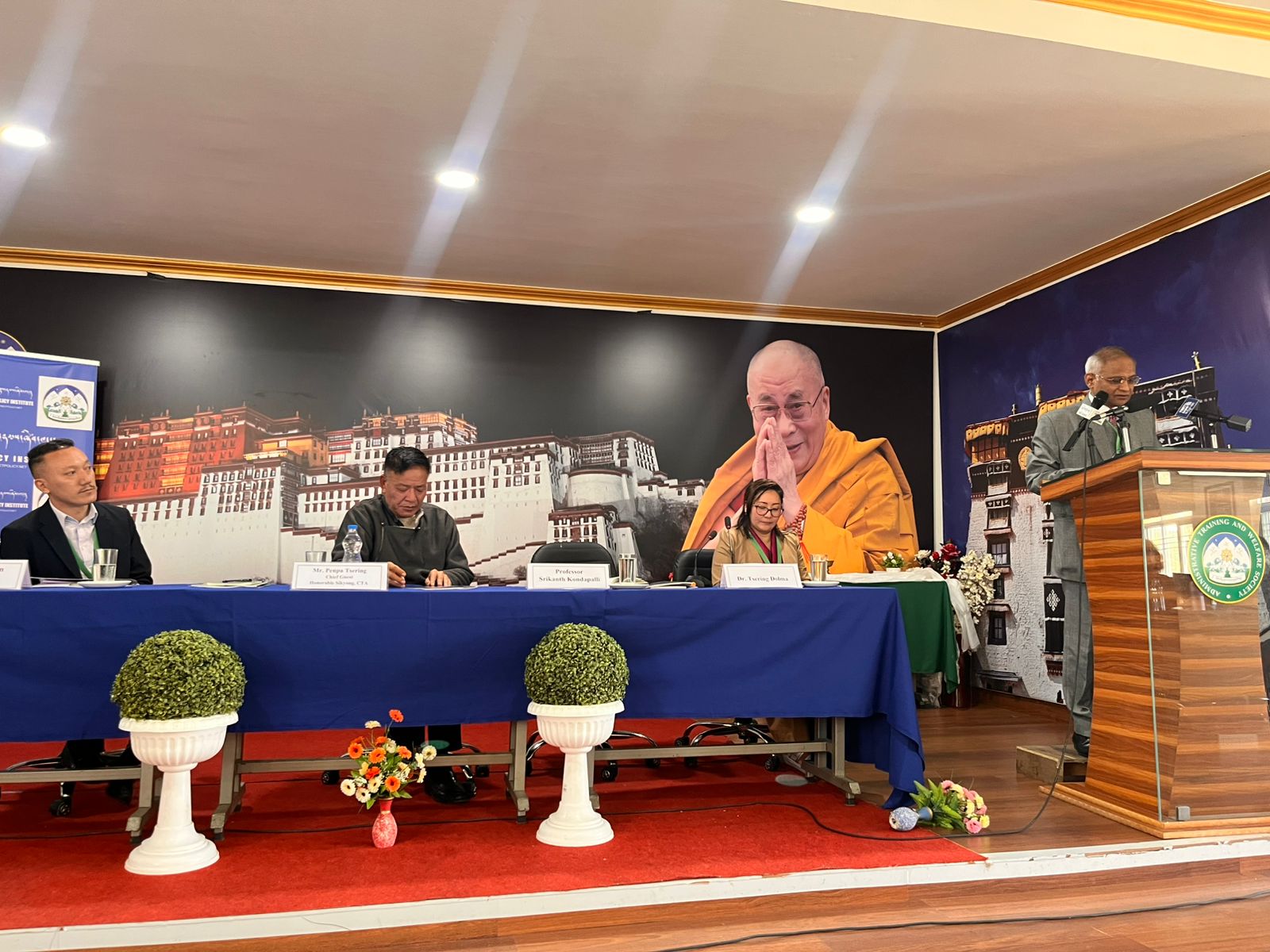
Following the inaugural speech, Professor Srikanth Kondapalli of Jawaharlal Nehru University addressed the conference, surveying the geopolitical and academic challenges facing Tibet. He pointed to China’s expanding influence through trade, investment, tourism and other measures that strengthen Beijing’s domestic control and international leverage, referencing President Xi Jinping’s remarks at the Tibet Forum on 29 August 2020.
Professor Srikanth warned of efforts to “sinicise” Tibetan Buddhism — altering religious texts, reshaping practices, and introducing education and development models that push cultural assimilation. He argued these policies, together with resource extraction and state-directed modernization, are designed to transform ethnic minorities and subsume Tibetan identity into a homogenised framework.
Echoing Sikyong’s call for wider engagement, Professor Srikanth urged scholars and institutions to intensify global outreach so that Tibet’s narrative receives broader international attention. On academic fronts, he highlighted constraints on Tibetan studies conducted within China, noting that Chinese academic programmes are subject to stringent party oversight and ideological control. He characterised Beijing’s approach to ethnic minorities as akin to a centralising model that subsumes diversity under state management.
Professor Srikanth concluded by encouraging vigilance, adaptability and proactive global engagement from scholars and organisations like the Tibet Policy Institute to ensure Tibet’s story is better understood internationally.
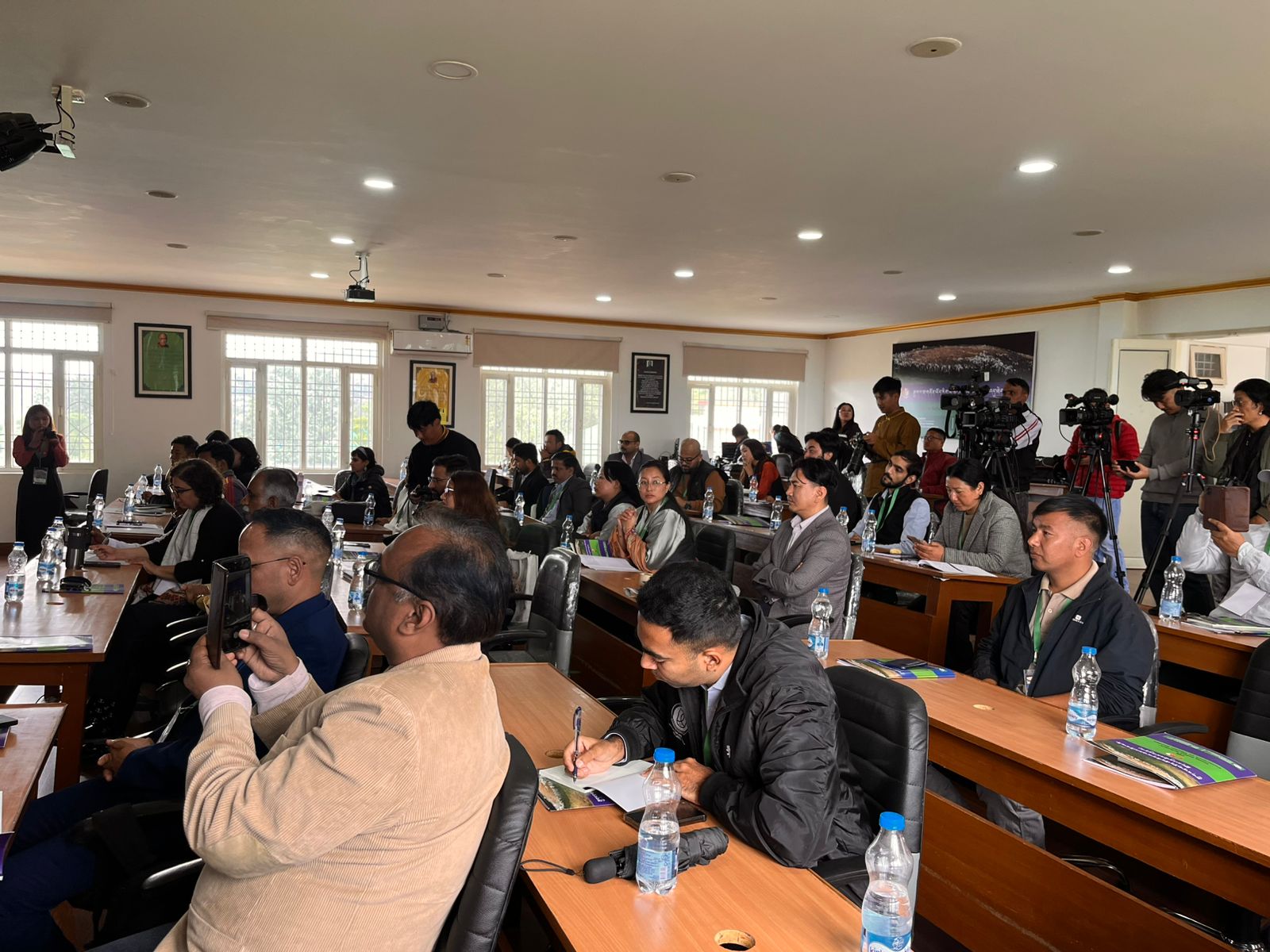
The 7th Young Indian Scholars’ Conference on Tibetan Studies will continues through 9 October 2025, featuring 23 to be presented by 26 young Indian scholars, with topics ranging from India–Tibet relations, geopolitics, trade, history, environmental concerns, and related topics.
 Source: Tibet.net